
If you’ve been paying attention to the tech world lately, you’ve probably heard the word “agentic” more times than you can count. It’s everywhere — in Forbes, in McKinsey reports, in Gartner forecasts, and in the conversations happening inside every major company in America right now.
But what does it actually mean? And more importantly, what does it mean for your business?
The short answer: agentic AI is the most significant shift in how we use technology since the smartphone. And unlike most tech trends, this one is moving faster than anyone predicted.
What is agentic AI, exactly?
Until recently, AI systems worked in a single direction: you typed something in, the AI responded. Ask a question, get an answer. Request a summary, receive a summary. It was reactive, prompt-by-prompt, and entirely dependent on you being in the loop every step of the way.
Agentic AI changes the fundamental model.
An AI agent is a software program that can understand a goal, break it down into steps, make decisions, use tools, and execute tasks — all without needing a human to prompt it at every stage. You give it an objective. It figures out how to get there.
According to IBM, the true definition of an AI agent is “an intelligent entity with reasoning and planning capabilities that can autonomously take action.” Think of the difference between a GPS that tells you directions one step at a time versus one that reroutes itself in real time, books a parking spot ahead of your arrival, and alerts you when traffic makes an alternate route faster. One responds to your requests. The other acts on your behalf.
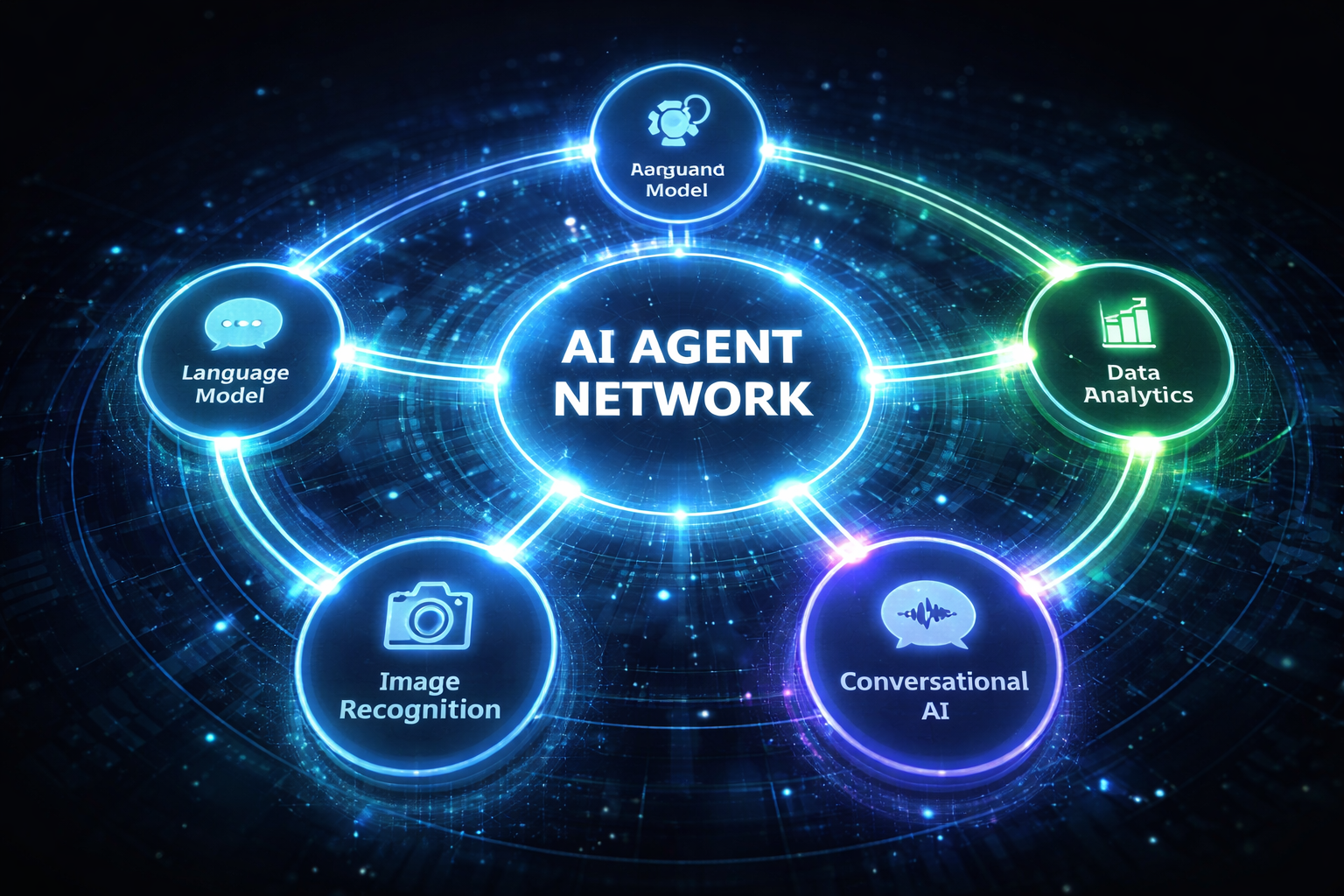
Real-world agentic systems today can browse the web, write and execute code, manage files, send emails, interact with APIs, fill out forms, place orders, and coordinate with other AI agents — all in pursuit of a goal you set once.
The numbers that tell the story
The growth of agentic AI is not incremental. It’s exponential — and the data from major research institutions makes that unmistakably clear.
Gartner predicts that by end of 2026, 40% of enterprise applications will include task-specific AI agents — up from less than 5% in 2025. That is an eight-fold increase in a single year. (Source: Gartner)
The market is growing at a pace that matches the hype. According to research cited by Machine Learning Mastery, the agentic AI market is projected to surge from $7.8 billion today to over $52 billion by 2030. Meanwhile, Deloitte’s 2026 Technology Trends report notes that Gartner expects 15% of day-to-day work decisions to be made autonomously through agentic AI by 2028, up from essentially zero in 2024.
Gartner reported a 1,445% surge in multi-agent system inquiries from Q1 2024 to Q2 2025 — signaling a once-in-a-decade inflection point in how organizations are thinking about AI. (Source: Machine Learning Mastery / Gartner)

And yet adoption is still in its early stages. Deloitte’s 2025 Emerging Technology Trends study found that while 30% of organizations are exploring agentic options and 38% are running pilots, only 14% have solutions ready to deploy and just 11% are actively using them in production. The gap between awareness and execution is wide — and that gap represents an enormous opportunity for the businesses that move first.
How multi-agent systems work
One of the most important developments in agentic AI is the shift from single agents to teams of specialized agents working together. The analogy to a human workforce is intentional and accurate.
Rather than one general-purpose AI trying to handle everything, leading organizations are building systems where a “manager” agent breaks a goal into subtasks and delegates each to specialized agents with particular capabilities. A logistics agent detects a supply chain issue. A procurement agent identifies a new vendor. A customer service agent notifies the affected client. All of this happens in one integrated, autonomous sequence — with no human touching it at any point.
What agents can actually do right now
- Browse the web and compile research reports
- Write, test, and deploy code without supervision
- Send emails, book meetings, and manage calendars
- Qualify sales leads and follow up with prospects automatically
- Monitor systems and resolve issues before a human notices
- Fill out forms, submit applications, and process documents
- Coordinate with other AI agents across departments and platforms
- Analyze data, identify trends, and generate reports
According to a report by Daston and Google Cloud, we are moving from “instruction-based computing” — where you do the work yourself — to “intent-based computing,” where you state a desired outcome and the AI determines how to deliver it. That is a fundamental shift in the human-computer relationship, not just an upgrade.
Where agentic AI is delivering results today
This isn’t theoretical. Agentic AI is already generating measurable business outcomes across industries.
Sales and lead management. AI sales agents are continuously analyzing customer data, past interactions, and outcomes to qualify leads, book meetings, and follow up automatically. Salesforce research shows this represents a 282% jump in AI adoption for sales functions compared to just two years ago.
Customer support. Agents can now read a customer complaint, check order history, identify the root cause, and deliver a personalized resolution — all automatically. The days of “please hold while we transfer you” are numbered.
Healthcare. The healthcare industry already reports 68% usage of AI agents. According to Accenture, AI applications in healthcare can generate up to $150 billion in annual savings for the industry. Ambient note generation, early warning systems, and AI-powered imaging diagnostics are all in active use today.
By 2026, nearly 85% of executives believe employees will rely on AI agent recommendations to make real-time, data-driven decisions, according to a report by Salesmate and IDC.
Small business operations. Low-code and no-code agentic platforms are removing the barrier that once required an engineering team to deploy AI. Today, around 80% of IT teams already use low-code tools, and on most platforms, building and deploying a basic AI agent takes 15 to 60 minutes. Business owners — not developers — are now the ones creating agents.
The real risks: what to watch for
Agentic AI is not without its challenges. Several of the same institutions tracking its growth are also flagging the risks of moving too fast without the right guardrails in place.
Gartner has predicted that over 40% of agentic AI projects will be canceled by the end of 2027 — primarily because legacy systems cannot support modern AI execution demands, and because governance frameworks haven’t kept pace with deployment speed. Organizations are, in some cases, deploying agents faster than they can secure them.
Deloitte’s research identifies three core obstacles: legacy system integration, data readiness, and governance. Nearly half of organizations surveyed cited searchability (48%) and reusability (47%) of data as challenges to their AI automation strategy. If an agent can’t access reliable, well-structured data, it can’t make good decisions.
The practical response that most leading organizations are adopting is what analysts call “bounded autonomy” — clear action limits, explicit escalation paths to humans for high-stakes decisions, and comprehensive audit trails of everything the agent does. The goal is not to eliminate human oversight. It’s to make human oversight necessary only at the moments that truly require it.
What this means for your local business
You don’t need to be a Fortune 500 company to benefit from agentic AI. The same shift that is reshaping enterprise software is also reshaping the tools available to small business owners — and the barrier to entry has never been lower.
At the simplest level, an agentic assistant for your business could handle customer inquiries 24/7, qualify incoming leads automatically, follow up with prospects who went cold, book appointments without human involvement, and send detailed summaries to your inbox — all while you focus on actually delivering your service.
The competitive advantage in 2026 does not belong to the businesses with the biggest budgets. It belongs to the businesses that are the fastest to act. As McKinsey estimates, generative and agentic AI could add between $2.6 and $4.4 trillion annually to global GDP. A meaningful share of that value will flow to the small businesses that move early, implement thoughtfully, and build systems that compound over time.
Three questions to ask yourself today
- What tasks do you repeat every day that follow a predictable pattern? Those are your first automation targets.
- Where are you losing leads or revenue because of slow response times or after-hours gaps? An agent doesn’t sleep.
- What would you do with 10 extra hours a week if your most repetitive work was handled automatically? That’s the real question agentic AI is asking every business owner right now.
Agentic AI is not a future trend. It’s the present reality for the businesses paying attention — and the competitive pressure for the ones that aren’t. The question is no longer whether autonomous AI will change how your business operates. It’s whether you’ll lead that change or react to it.
Sources
- Gartner. (2025). Gartner Predicts Over 40 Percent of Agentic AI Projects Will Be Canceled by End of 2027. gartner.com
- Deloitte Insights. (2026). Agentic AI Strategy: Tech Trends 2026. deloitte.com
- IBM Think. (2025). AI Agents in 2025: Expectations vs. Reality. ibm.com
- Machine Learning Mastery. (2026). 7 Agentic AI Trends to Watch in 2026. machinelearningmastery.com
- McKinsey & Company. (2024). The Agentic Organization: Contours of the Next Paradigm for the AI Era. mckinsey.com
- Daston Corporation & Google Cloud. (2026). The Agentic Era: 5 AI Trends Redefining Business in 2026. daston.com
- OneReach.ai. (2026). Agentic AI Stats 2026: Adoption Rates, ROI & Market Trends. onereach.ai
- SS&C Blue Prism. (2026). Future of AI Agents: Top Trends in 2026. blueprism.com
Ready to put AI to work for your business?
Double O Digital builds custom AI assistants for local businesses nationwide. From lead capture to booking to follow-up — we handle the build so you can focus on growth.
Start Your Assistant →